The Great New Orleans Fire of December 1788
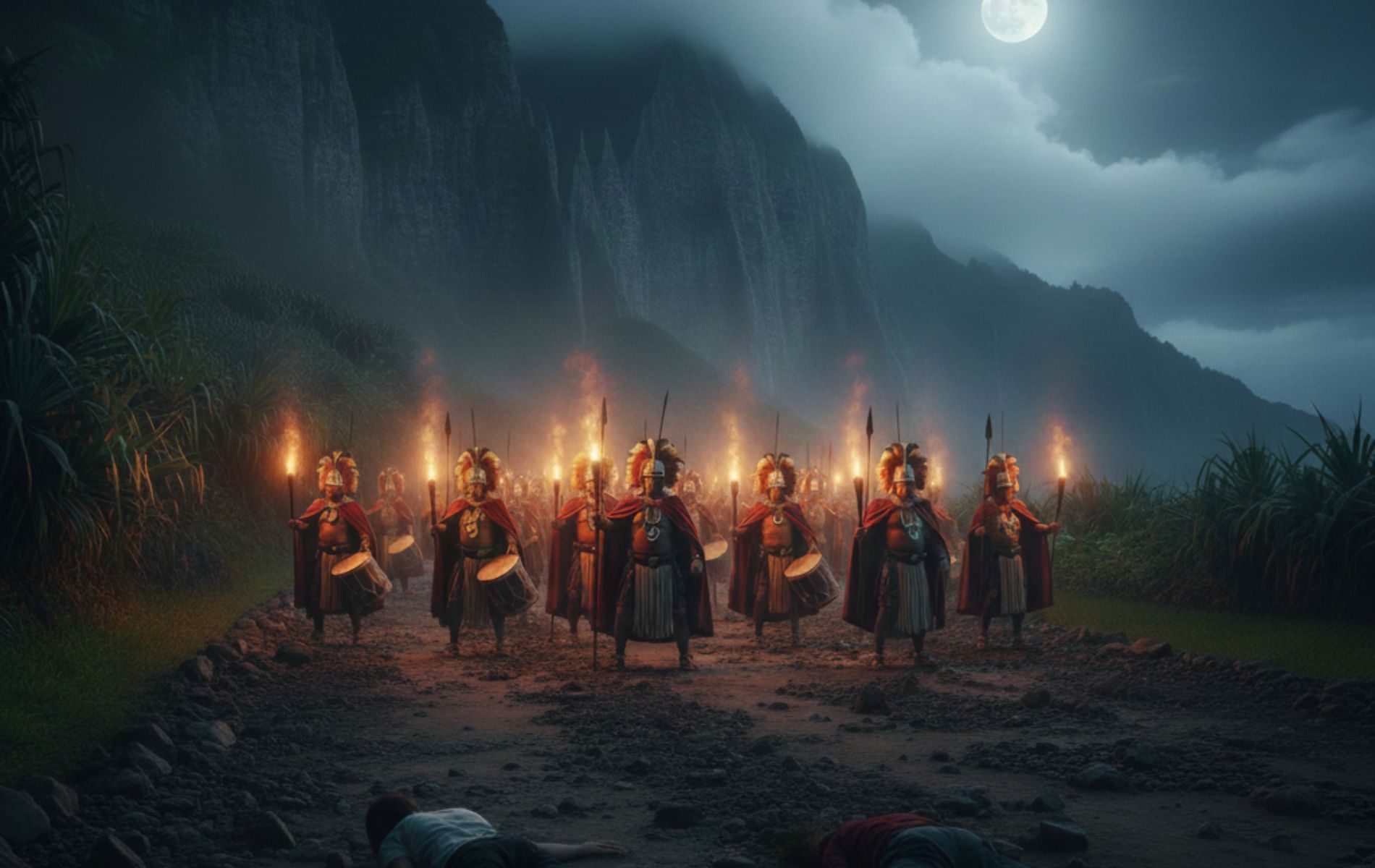
When December arrives in Hawaiʻi, the islands grow quieter. The trade winds cool, the nights stretch longer, and a stillness settles across the valleys. During this season, locals say that the ancient spirits of Hawaiian warriors, known as the Night Marchers, return to walk the paths they once guarded.
If you listen carefully, you might hear the soft echo of drums or catch a flicker of torchlight along a distant ridge. It is a time when the spiritual world feels closer, and the stories of the Huaka‘i Pō, the Procession of the Night, come alive again.
The Morning the French Quarter Burned
On the morning of March 21, 1788, Holy Saturday, the people of New Orleans prepared for Easter. The city was still under Spanish rule, its streets narrow and crowded with wooden homes built in the old French style. By mid-morning, church bells tolled not in celebration, but in alarm.
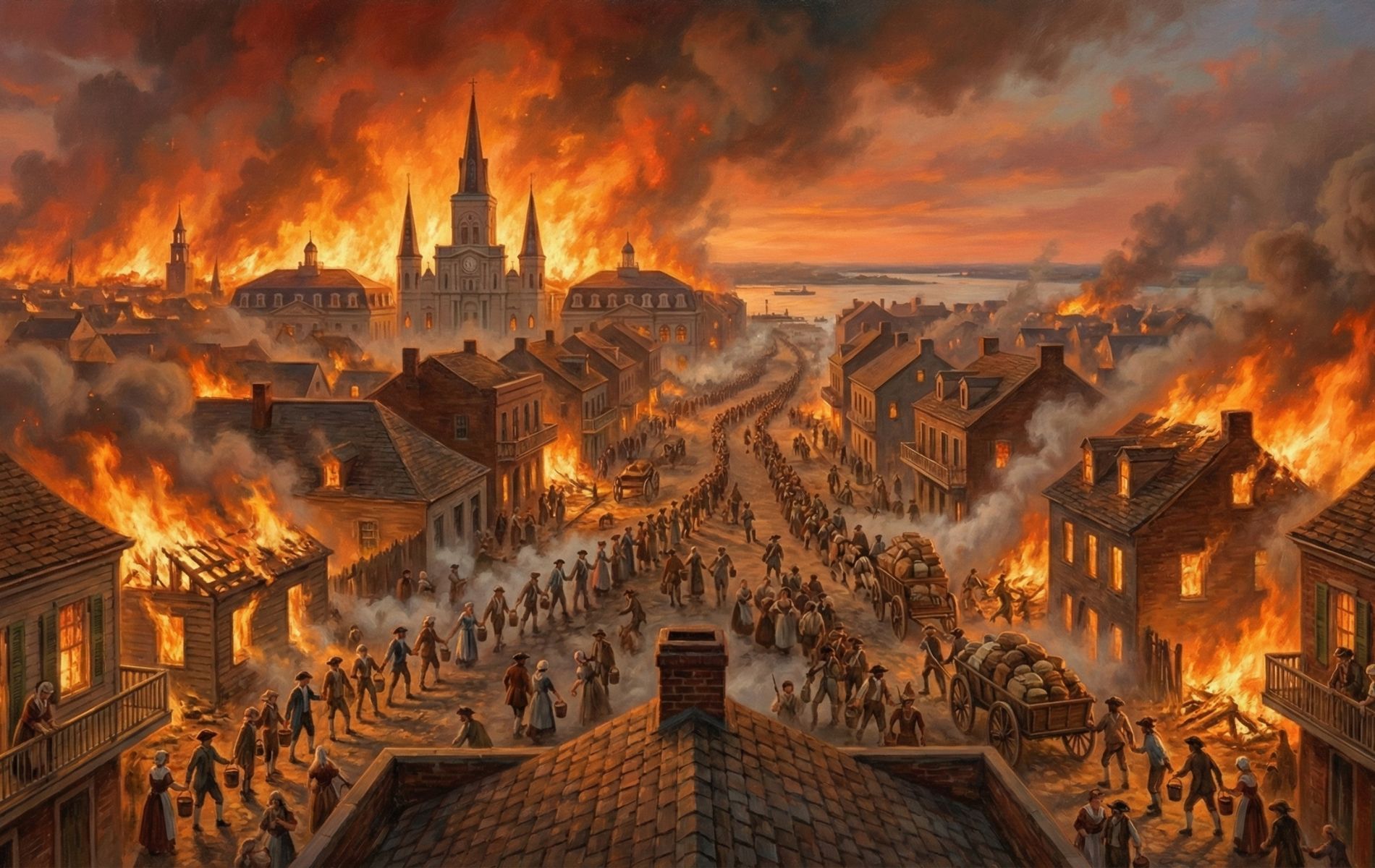
A small flame, sparked by a candle in the home of Don Vincente José Núñez, the military treasurer, ignited curtains on Chartres Street, near what is now the French Quarter. Within minutes, strong winds carried embers from one roof to another, and the flames spread across the heart of colonial New Orleans.
How the Fire Began on Chartres Street
The tragedy began around 10 a.m. when a candle, lit for Good Friday observance, accidentally set fire to draperies in Núñez’s home. Because it was a holy day, church bells were not permitted to ring for non-religious reasons — a Spanish law intended to maintain sanctity. As a result, by the time the warning spread, much of the French Quarter was already ablaze.
The combination of wooden structures, cypress shingles, and strong southeasterly winds turned the city into a furnace. The flames consumed building after building, forcing residents to flee toward the Mississippi River as ashes rained from the sky.
Destruction: Churches, Homes, and Lives Lost
The Great New Orleans Fire destroyed 856 buildings, including nearly every home, church, and business in the city’s center. The St. Louis Church, the Cabildo, and the Presbytère were reduced to ruins. The governor’s residence, the jail, and countless homes vanished in smoke and ash.
While official records listed few deaths, hundreds were injured and left homeless. The fire’s psychological impact was immense. Witnesses described the flames as a wall of light devouring the night sky, leaving only charred ruins and ghostly silence in its wake.
Rebuilding the French Quarter in Spanish Style
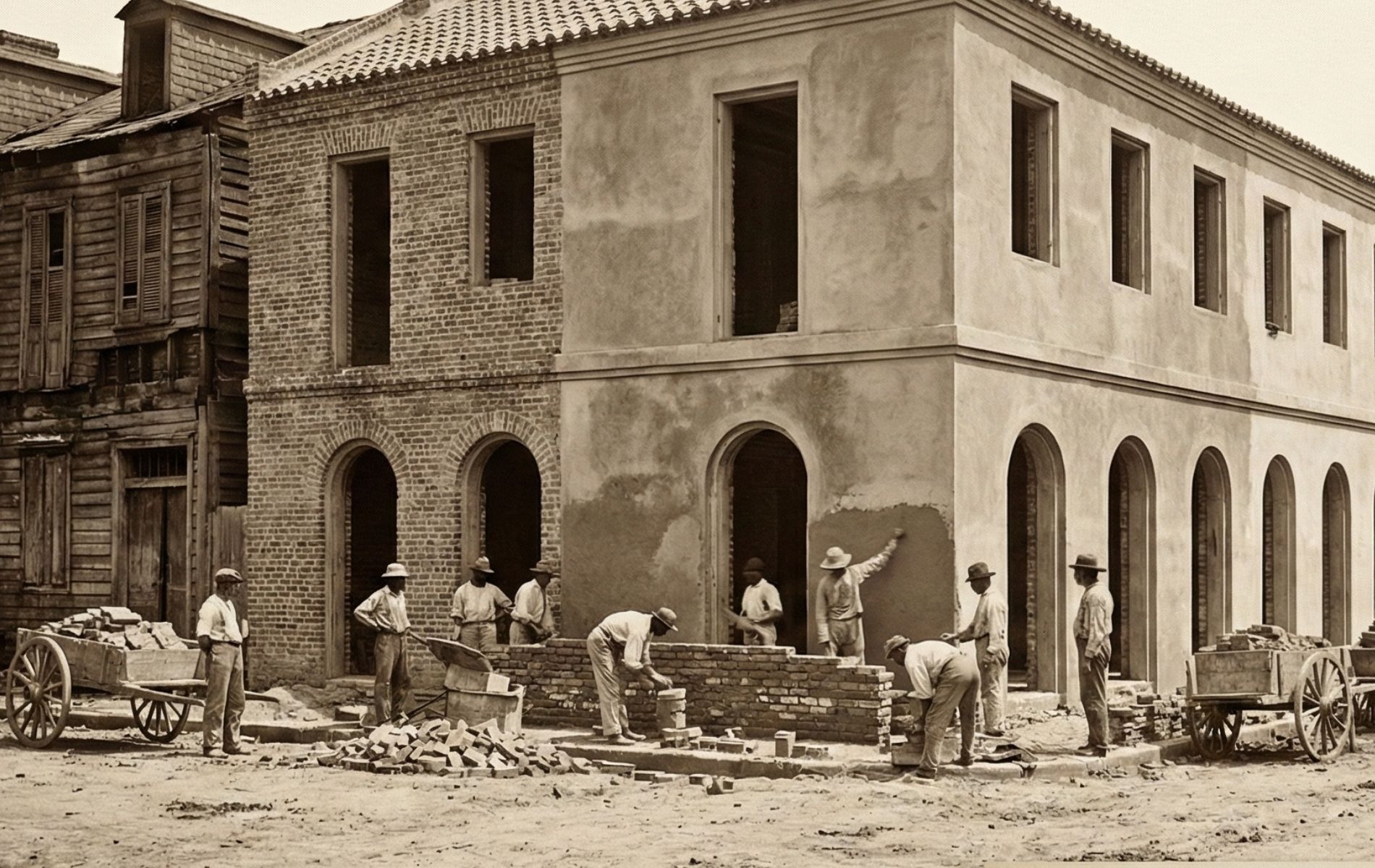
Architectural Transformation After the Fire
New Orleans faced the daunting task of rebuilding nearly from scratch. Under Spanish rule, Governor Esteban Rodríguez Miró enforced new building regulations:
- Structures had to be made from
brick or stucco, not wood.
- Roofs were replaced with
tile instead of flammable shingles.
- Buildings had to include
courtyards to prevent the spread of future fires.
Birth of the Iconic Stucco and Iron-Balcony Look
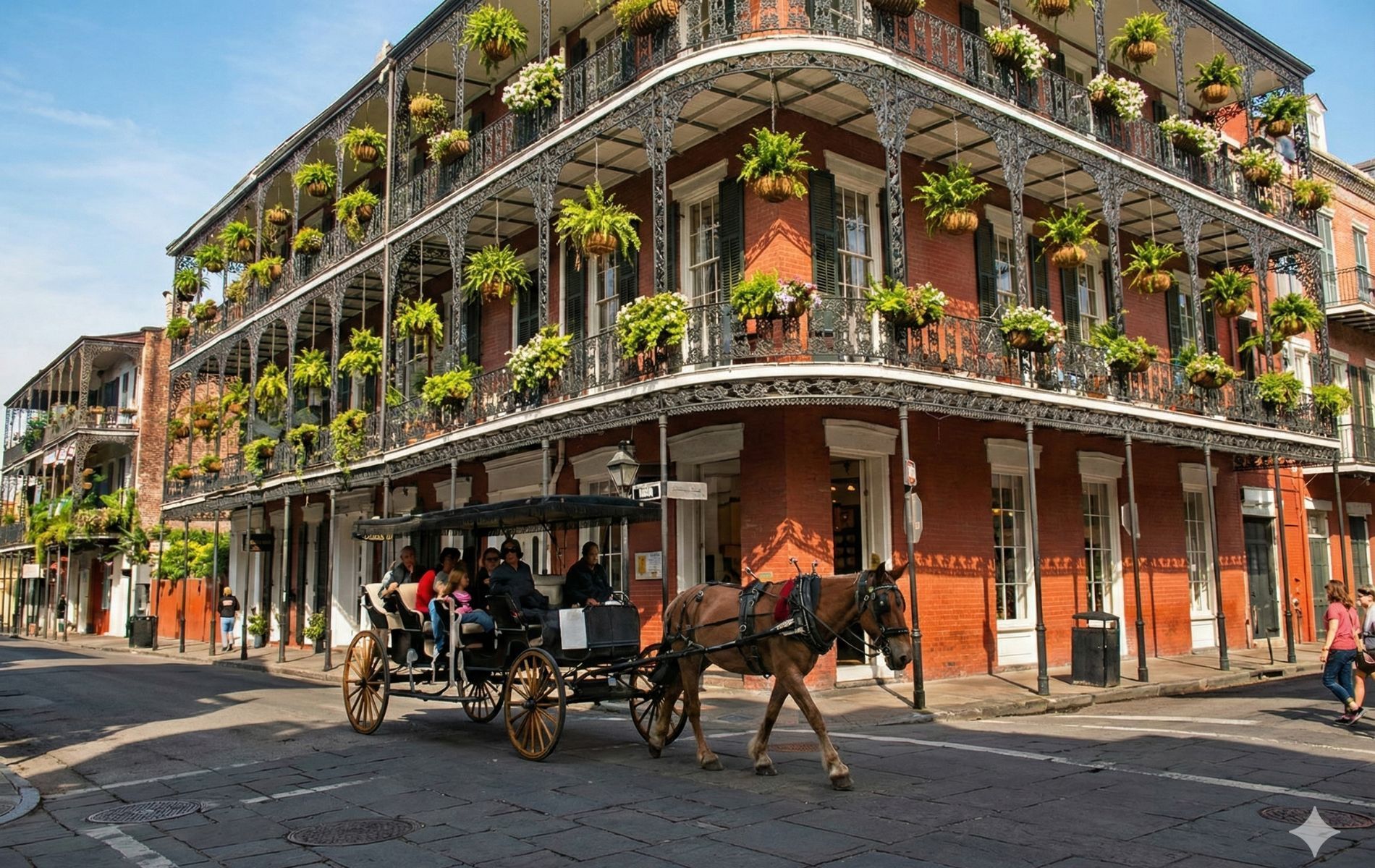
These regulations gave rise to the French Quarter’s iconic look we know today. The arched doorways, wrought-iron balconies, and pastel facades that define the district are remnants of the city’s rebirth. Ironically, the very fire that nearly erased New Orleans gave birth to its most recognizable identity.
A second blaze in 1794 destroyed 212 more buildings, solidifying the transition to the Spanish Colonial style that still stands over two centuries later.
Ghostly Legends Born from the Ashes
Haunted Sites Linked to the 1788 Fire
Many believe that not everyone who perished in the Great Fire truly left the French Quarter. Visitors on our New Orleans Ghost Tour often report sightings and sensations near places rebuilt over the ashes.
- Chartres Street remains a focal point of paranormal activity, where the fire first began. Witnesses describe a woman in mourning garb wandering the area at dusk, her face illuminated as if by flickering firelight.
- At the site of the
old St. Louis Church, replaced by the present-day
St. Louis Cathedral, some guests report hearing phantom bells and faint hymns carried on the wind.
The Ghosts of the Cathedral and Chartres Street
Legend says that the spirits of those who lost everything — and those who died in despair — still linger. Guides and locals have heard whispers in Spanish echoing through empty courtyards at night, the soft sound of crackling wood, and the distinct scent of smoke that appears and fades with no visible source.
Walk Through History with American Ghost Walks
The story of the Great New Orleans Fire of 1788 is not only one of destruction, but of resilience, rebirth, and mystery. The French Quarter’s beauty was forged from tragedy, and its haunting presence still breathes through every street and balcony.
See the Fire’s Legacy on Our French Quarter Ghost Tour
Walk the same streets reborn from the ashes. Discover the haunted remnants of the 1788 fire, hear tales of survival and sorrow, and step into the past with American Ghost Walks’ New Orleans Ghost Tour.
Experience the history, architecture, and spirits that make this city unlike any other.
Book your New Orleans Ghost Tour today and see for yourself why the ghosts of 1788 still whisper through the Quarter.
Frequently Asked Questions
What caused the Great New Orleans Fire of 1788?
The fire began when a candle in Don Vincente José Núñez’s home on Chartres Street accidentally set drapes on fire. Strong winds spread the flames across the French Quarter.
How much of the French Quarter was destroyed?
More than 850 buildings burned, nearly 80 percent of the city’s structures at the time.
Was the St. Louis Cathedral rebuilt after the fire?
Yes. The original church was destroyed and later replaced by the current St. Louis Cathedral, completed in 1794.
Are there ghosts connected to the 1788 fire?
Many locals and visitors claim to encounter apparitions, especially around Chartres Street and Jackson Square, believed to be spirits of those lost in the Great Fire.